
Author: Jonathan Miller

Remembering Dr. Jerry Perrin
History is oft said to be what historians have the vision to find, shape and memorialize so that we may better understand and learn from our past. And in many ways, the history of Lewis County is as much about our historians as it is about our history: the Houghs; Byron Bowen; Art Einhorn; George Davis; the Van Arnums; Louis Mihalyi; George Cataldo…and on and on.
One who certainly belongs in that discussion is Dr. Jerry Perrin, the long-time curator and office manager of the Lewis County Historical Society. We must first confess, however, that writing anything about Jerry in this fashion is nothing we ever wanted to do: certainly not during a pandemic when friends and colleagues cannot get together to talk or grieve; and frankly, as a piece in memoriam, not ever.

Jerry Perrin – Greystone Plaque Ceremony
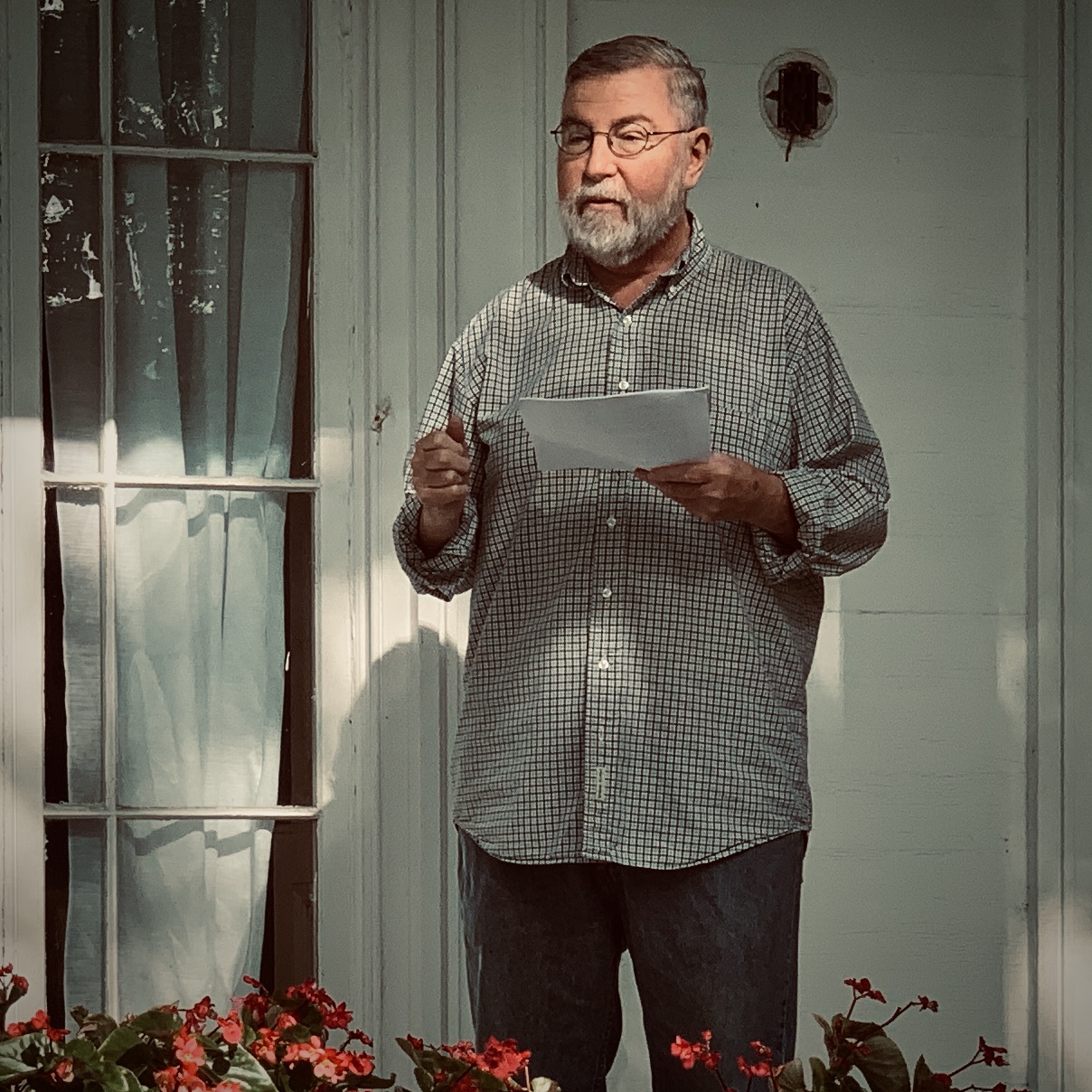
Sadly, however, during Christmas week in the waning days of the godawful year that was 2020, the Historical Society lost an irreplaceable colleague and friend, and the County lost a fine historian, when Jerry passed away. Hopefully he’s at peace, but here at the Historical Society, even long afterwards, we remain heartbroken.
For those of you who had the pleasure of getting to know Jerry over the years, you will understand the depth of this loss. In many ways, Jerry had been the life blood of our Society for much of the past two decades, our heart and soul, and at times the very glue that held us all together.
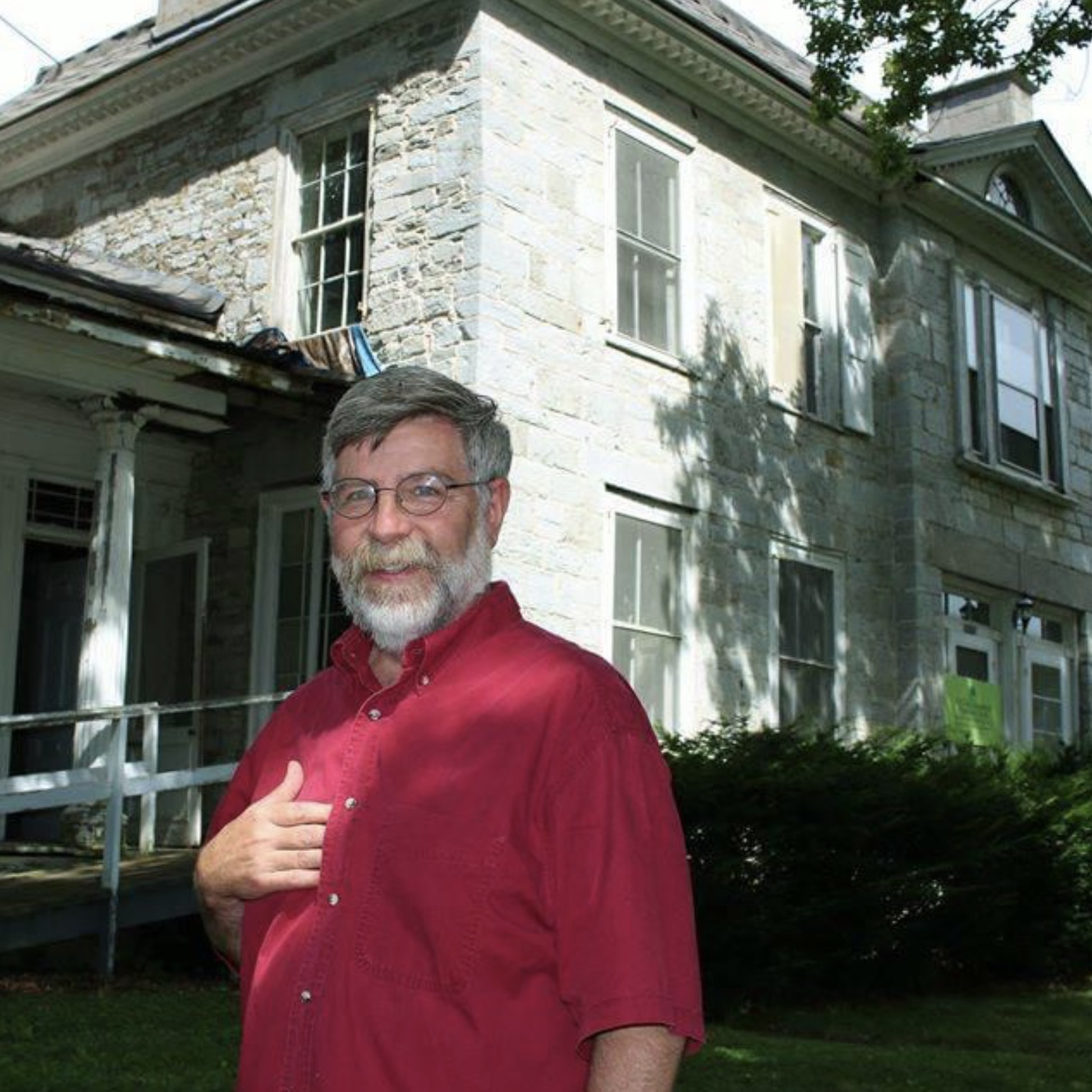
He was a gentle spirit, a friendly voice, a tireless volunteer, a gifted historian, a thoughtful and curious mind, a driving force behind the restoration of Greystone (the General Walter Martin House), and a lover of historic buildings and cemeteries and glassware and flatware and coins and old books…my goodness, he had a list of interests that seemed endlessly to grow.
Jerry Perrin At Greystone
Always generous with his time; routinely going out of his way to help anyone with a question of genealogy or local history; patience was his strength whether someone needed a hand or an ear; and should anyone ever do anything for him, no matter how small, he was one of the most appreciative people you were ever likely to meet.
He was continually pulling some item out of his personal collection of antiques and giving it to a visitor, a friend or someone who showed him a kindness – because, well, that’s just the way he was.
So too is it worth a moment to speak about the intersection between Jerry the person and Jerry the historian; for Jerry actually came to history later in life. Many do not know this about him – and he did not often talk about it – but he was a gifted chemical engineer in his early years. He came out of Edwards in St. Lawrence County, where he graduated valedictorian. He would then go on to Syracuse University, where he graduated, magna cum laude, as the top student in chemical engineering. Following that, he got both a masters and then a PhD in chemical engineering, which turned him into “Dr.” Jerry Perrin. He would then go on to work in high-tech industrial development, where he was a highly-regarded member of many academic and professional organizations, filed for and held multiple patents in his own name, and published a number of scholarly articles.
Jerry spent a good bit of his life on the east coast outside Boston and the west coast in Seattle, but at some point, his interests turned to what he would call “old stuff.” He returned to northern New York, ultimately settling in Talcottville, buying the historic 200-year old Munn family house, opening an antiques business and, much to the community’s good fortune, volunteering at the Lewis County Historical Society. And what a volunteer he was.
His tireless dedication over the years would lead to service as both an officer and director of the Society, the chair at one time or another of most every committee we have, and ultimately the Society’s curator and office manager. And when periodically we would float the idea of making him “Executive Director,” he would turn it down as too lofty a title. Did we mention his humble nature and humility?
Jerry Perrin – Hough Room
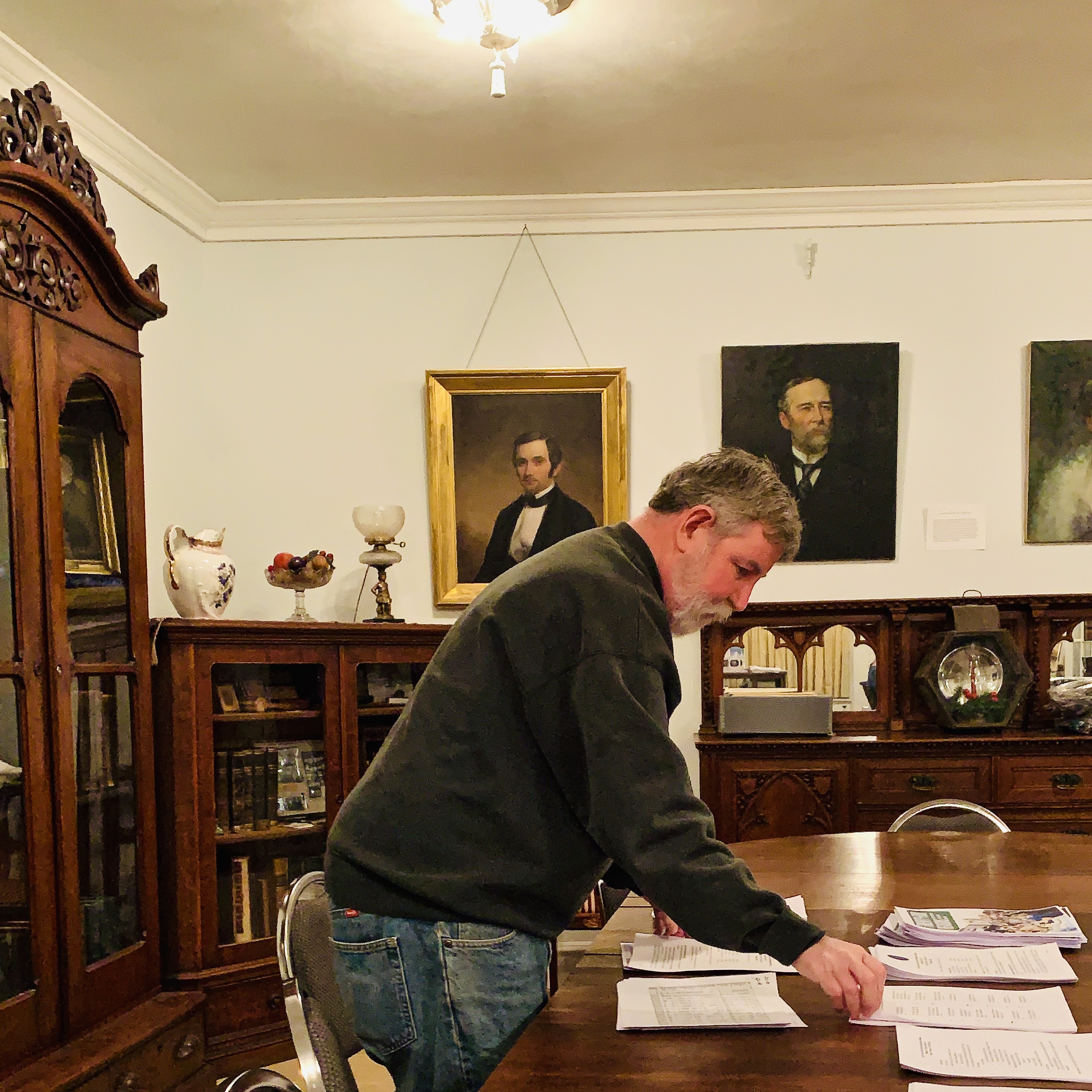
While you would think his hands were full within the walls of the our Society, he would also join and become an active member of both the Martinsburg Historical Society and the Lyons Falls History Association; he was historian for the town of Leyden; he served on the board of the Talcottville cemetery; he would regularly liaise with other historians, societies and museums around the County, sharing information and trying to be of help as he did; he was deeply involved in the North Country’s tri-county historians association, both attending and sponsoring events; he was an active member of the Professional Historians of New York State; he worked with any number of people to get historic places in Lewis County listed on the National Register; and when the Historical Society itself went through a tough patch a decade or so ago and much of its leadership disappeared, it’s fair to say that the Society might not have survived without Jerry’s presence and perseverance to hold everything together.
Some knew, but most did not, of the illnesses that followed his leukemia diagnosis a couple of years ago, graft vs host disease and myasthenia gravis. But while it certainly slowed him down, it did not diminish his interest in trying to help anyone looking for information or who came to the Historical Society. When his illness robbed him of the use of his legs for a period, he literally would crawl up flights of stairs to retrieve an artifact for someone. When his eyesight declined, he would look for information in a document or book with a big magnifying glass, or have a colleague read it to him – just so he could answer a question for someone. Even in his last days, on those occasions when he was strong enough to talk at length, he still loved to talk about history and the Historical Society and what was going on with all of us. His close friendships sustained him, but he was always insistent that we get back to people to tell them how much he valued the help, attention and love that others had shown for him through his long illness. Even someone’s quick note deserved a response, he would say.
Our words only but scratch the surface of who Jerry Perrin was and what he has meant to the Historical Society and the North Country community. Perhaps better are some of the many notes we received after his passing: “he was the absolute best”; “we have lost one of the greatest”; “a true gentleman”; “one of the nicest people I ever met”; “always friendly and helpful”; “a champion of preserving local history”; “really liked his kind and gentle manner”; “have been trying to find the right words – the very soul of the Historical Society”; “he was my friend”; “a very gifted historian”; “such a kind man and always brought me an antique thimble for Christmas”; “what a great, knowledgeable person”; “will always remember the cooperative spirit that was his”; “such a kind soul”; “his quiet, gentle spirit with his sparkling blue eyes always impressed me”; “generous with his time and intellect”; “never lacked in caring for the Society, it collections and community”; “a Lewis County treasure.” Hopefully their words give some sense of who this good man was. Jerry Perrin: a dedicated historian; a genuinely good and decent human being; our friend. We will miss him greatly.

The Lowville Mineral Springs House
You wouldn’t know it today, but in the latter part of the 1800s, one of the top tourist attractions in Lewis County was the Lowville Mineral Springs House – located a mile west of the village along what today is Route 12 (including most everything north of that road from All Seasons Landscaping to the Gordon Road, and all the way over to Mill Creek).

At the time this restorative resort was built, “taking the waters” was part of the emergence of a medical and public health industry evolving away from bloodletting, blistering and purgatives as the principal treatments for many ailments. Lowville, of course, was not alone in this emergence, as various New York locations were thought to have beneficial health properties due to the existence of “healing mineral springs.” And these locations began to flourish as people increasingly looked to them not only as places of healing, but as high society and entertainment venues.

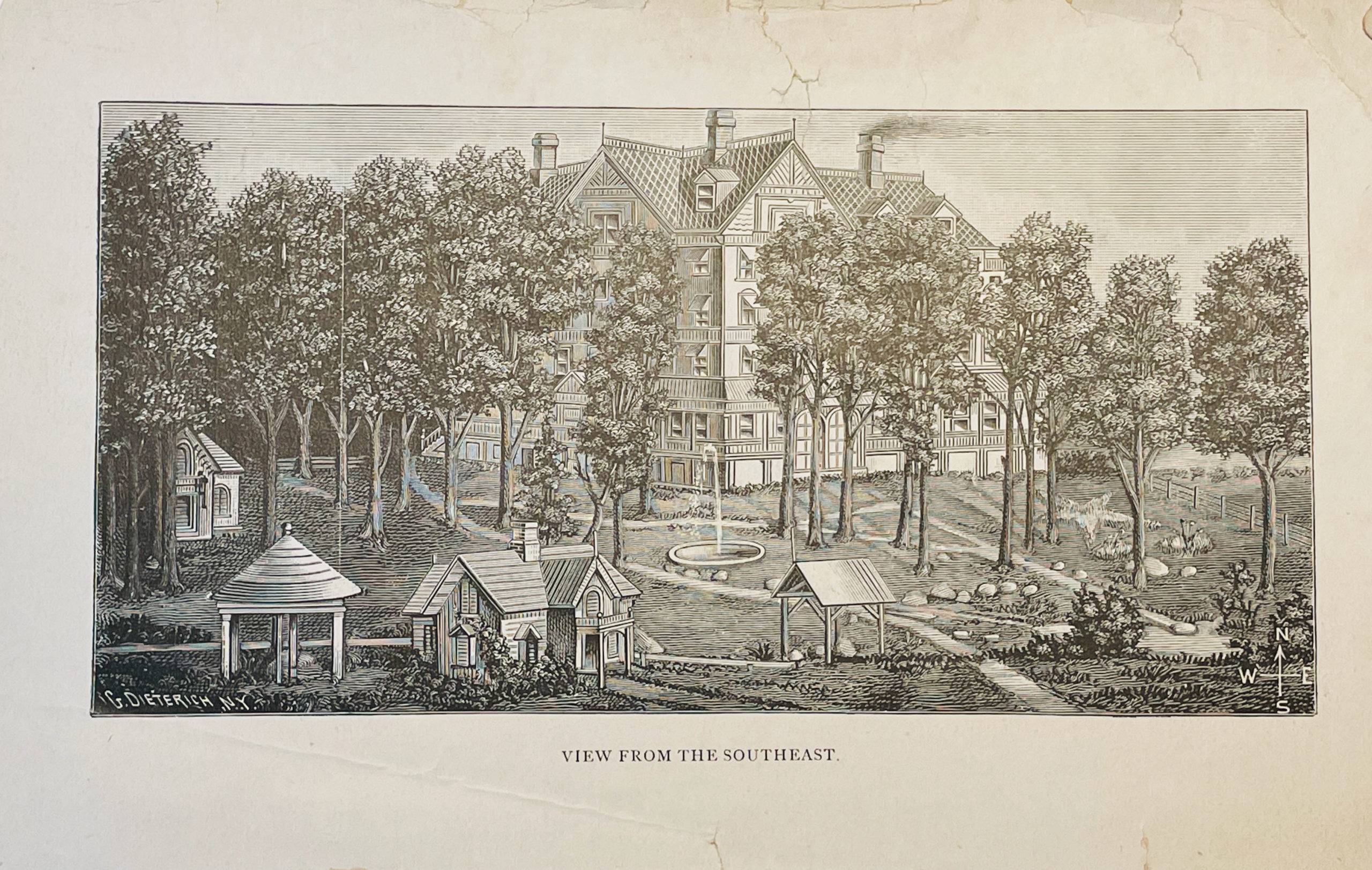
The most well-known of these was the famous Saratoga Springs resort outside Albany, but there were others around the state – and the Lowville Mineral Springs House quickly took its place among those. Over a period of thirty years or so, people increasingly would travel to Lowville to enjoy its healing mineral springs at a fine hotel amidst beautiful scenery.
The original hotel, known as the “Grove House,” was constructed in 1872 by Dr. Horatio S. Hendee, not only a respected local physician, but a well-known investor in building projects around the county. Quite quickly, Hendee sold off interests in the hotel as it began to develop. Ultimately, the entire estate was purchased by Lowville’s John O’Donnell, who not only was the publisher of The Lowville Times newspaper and the builder of The Times Block in downtown Lowville, but he had served as the area’s Assemblyman and State Senator and ultimately ended up as the State’s Railroad Commissioner – a position of extreme political importance at the time. Not surprisingly, O’Donnell used his many influences to promote the Mineral Springs House.

While the main portion of the hotel burned in the 1880s, the O’Donnells built it back bigger and better. And at its height, the Mineral Springs House resort encompassed several hundred acres of land, and the rebuilt Grove House was considered one of the finest buildings in the state. With its extensive wrap-around porches and wide verandas, the hotel sat amidst a beautiful grove of 150 maple trees and could accommodate upwards of 100 guests at a time. And due to demand, additional cottages were built around the estate to accommodate a growing guest list.
The hotel itself boasted a large performance stage, and entertainment acts from as far away as New York City were regularly booked to perform there throughout the season. Dedicated carriages ferried guests back and forth to Lowville and its train station. Telegraph (and later telephone) services were available to all guests, as were complete laundry services. The rooms were large, well-furnished and well-ventilated. And the hotel was heated by the then modern “Dead Air Cell System,” which had been developed and patented by O’Donnell and was regarded by architects and engineers at the time as both “effectual and inexpensive.”
The house had a fine kitchen and dining room to which guests were granted complete access, and its food operations were largely self-sufficient. The estate operated its own “Maple Grove” dairy farm to provide its guests with fresh, high quality milk, cream, and butter. The farm had a herd of “fine blooded” Jerseys, a hennery to provide fresh eggs, livestock for meats, and extensive vegetable gardens and greenhouses. And every spring, sap was collected from the maple trees on the estate and maple syrup, candies and butters were produced.

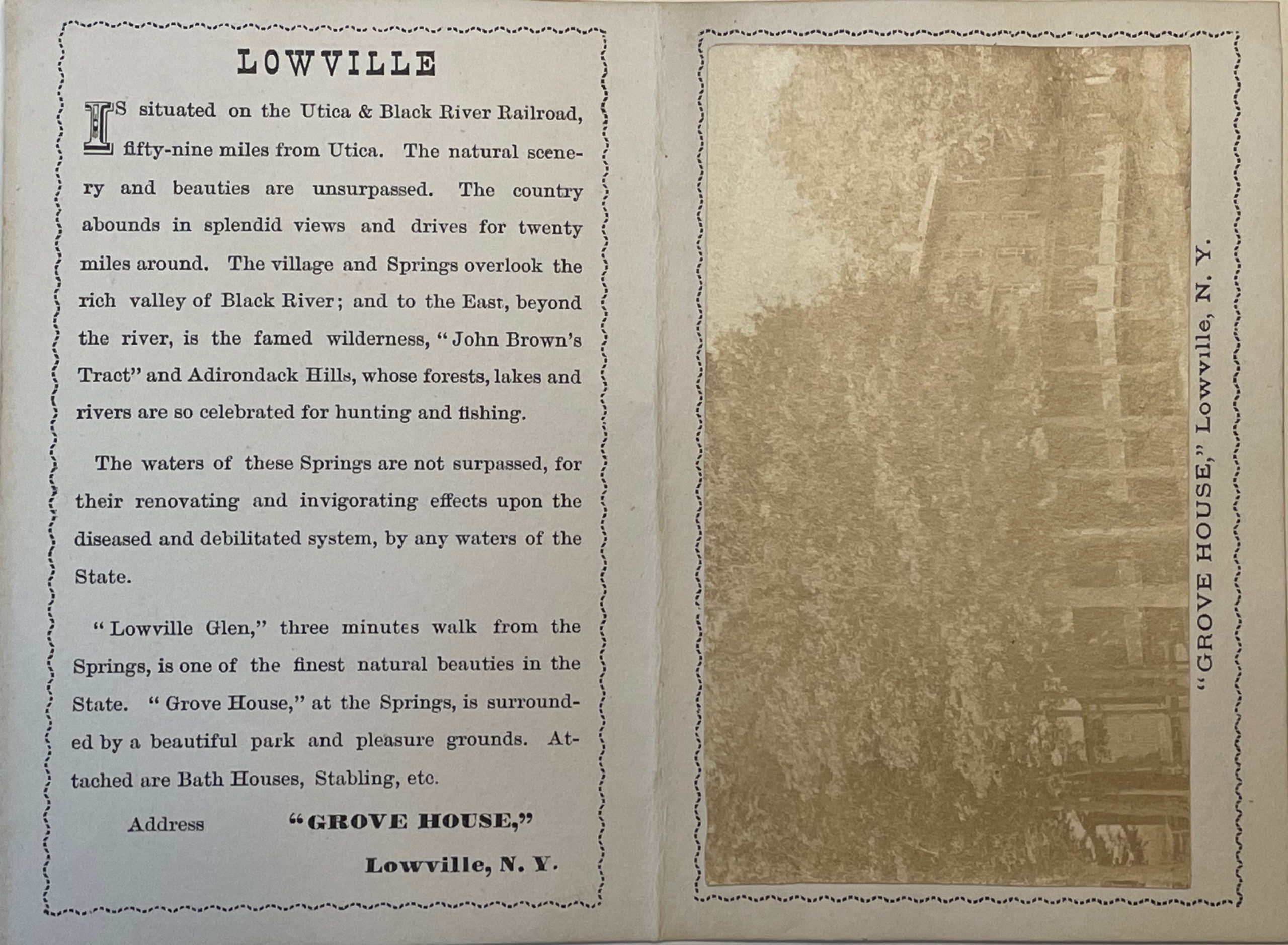
The estate also had lavish grounds, and its gardens were known for their serene beauty. There was lawn tennis, a track for horseback riding and driving, a great revolving swing (quite like a Ferris Wheel), and croquet. Guests could swim in its manicured ponds and freely wander the beautiful grounds and miles of trails, which included access to the nearby Mill Creek gorge, euphemistically called “the Lowville Glen.”

But the big draw, of course, were the springs. And there were at least five natural mineral springs on the estate: three were pure water (one of which was known as the silver springs); one was white sulphur; and the last was iron. Doctors at the time recommended such springs to heal a variety of ailments, ranging from “impurities of the blood,” rheumatism, neuralgia, bronchitis, pleurisy, and liver problems to insomnia and depression.
Guests would drink the silver and white sulphur spring water, with doctors deeming it perfectly safe and beneficial. The iron water was also consumed, but doctors only recommended certain amounts for specific ailments. The white sulphur water in particular was said to have “proved a wonderful remedy for a large class of diseases. It acts directly upon the liver and kidneys, and, unlike all other sulphur water, is not disagreeable to the taste. When slightly charged, it is clear and more sparkling that Apollinaris, and is the king of all table waters.”

Spring water was not only popular for drinking, but also for bathing, in both cold and hot baths. The estate erected two large bathhouses, one for men and the other for women. Water from the white sulphur and iron springs were brought to the bathhouses and heated for the comfort of guests.
The Lowville Mineral Springs House handled hundreds of visitors each season, which typically began in late spring and ran all summer into mid-fall. Borders paid $2-3 a day or $6 a week (local non-boarders could also enjoy the springs’ benefits, as jugs of spring water were bottled and brought to the village of Lowville to be sold for $0.20 per jug).
More than just a health resort, the grounds were used as a center for entertainment, meetings, and community events. Perhaps due to O’Donnell’s stature and political influence, a wide variety of political candidates from across New York state would regularly come to the Lowville Mineral Springs to plan their campaigns, while taking advantage of the quiet, relaxing, and revitalizing atmosphere and environment. The O’Donnells prided themselves on their hospitality and, for a number of years, lived right on the grounds. They developed a reputation for treating every guest as if they were family and regularly received guest testimonials praising the estate for its exceedingly kind owners, its healing waters, and beautiful scenery.

And yet, despite all its luxury, success and acclaim, the venture was relatively short-lived. By the early 1900s, John O’Donnell had died, the business had largely shut down and parts of the resort thereafter either burned, withered away from neglect or were plowed under by local farmers.
Sadly, nothing remains of the resort or its lavish grounds today.

“Due To Irregular Habits,” An All-Too-Short Story of the Harrisburg Glass Factory
This is a tale of the rise and demise of the Harrisburg Glass Factory. We offer it up because every time its existence is mentioned, most folks profess surprise that the small town of Harrisburg ever had such an enterprise. But it’s true: there once was a small glassworks east of the Cobb Rd. and just off the Widener Rd. – in the midst of today’s windmill county, on what was the old John Rice farm – and it produced some of the most beautiful early American aquamarine Lilypad glassware one can imagine.
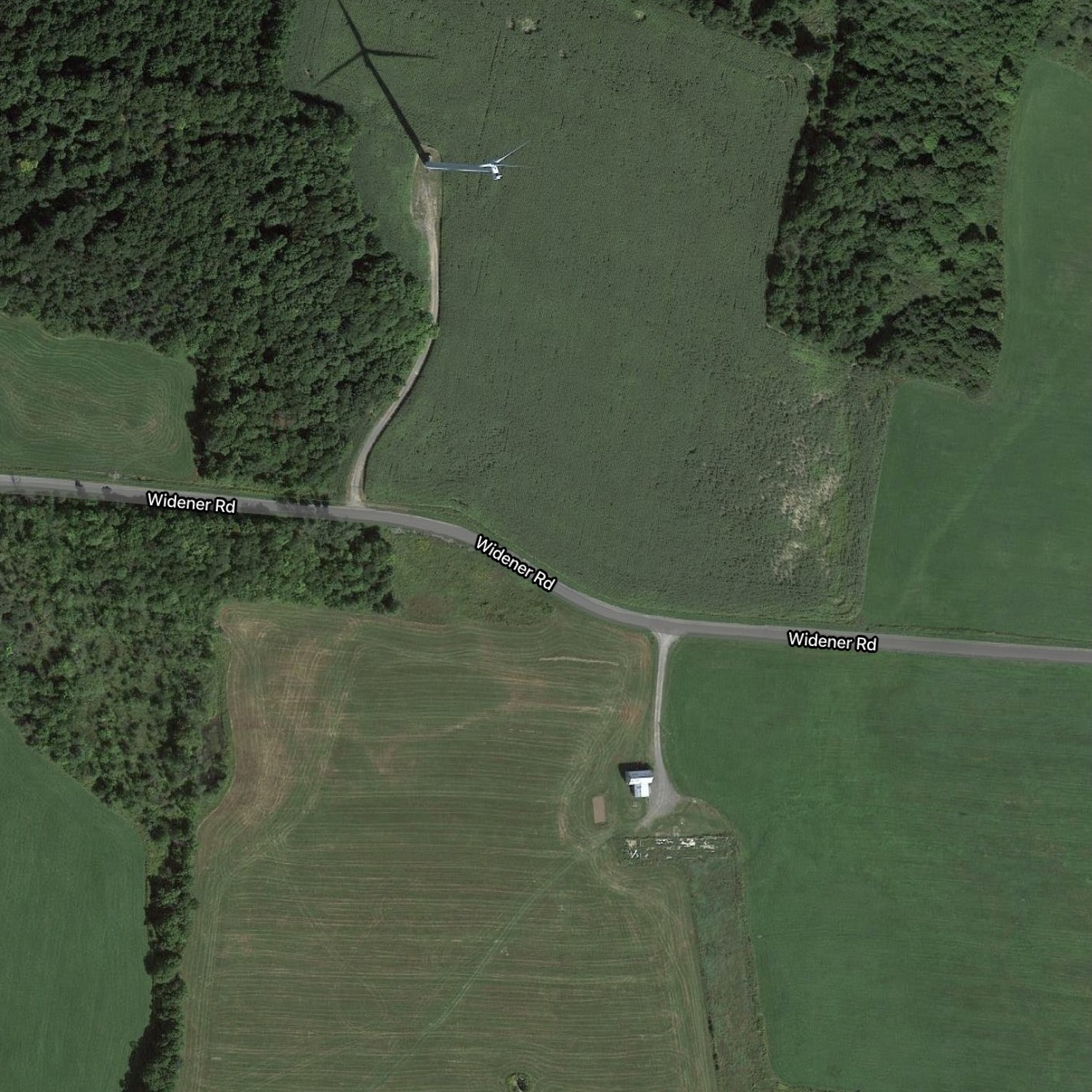
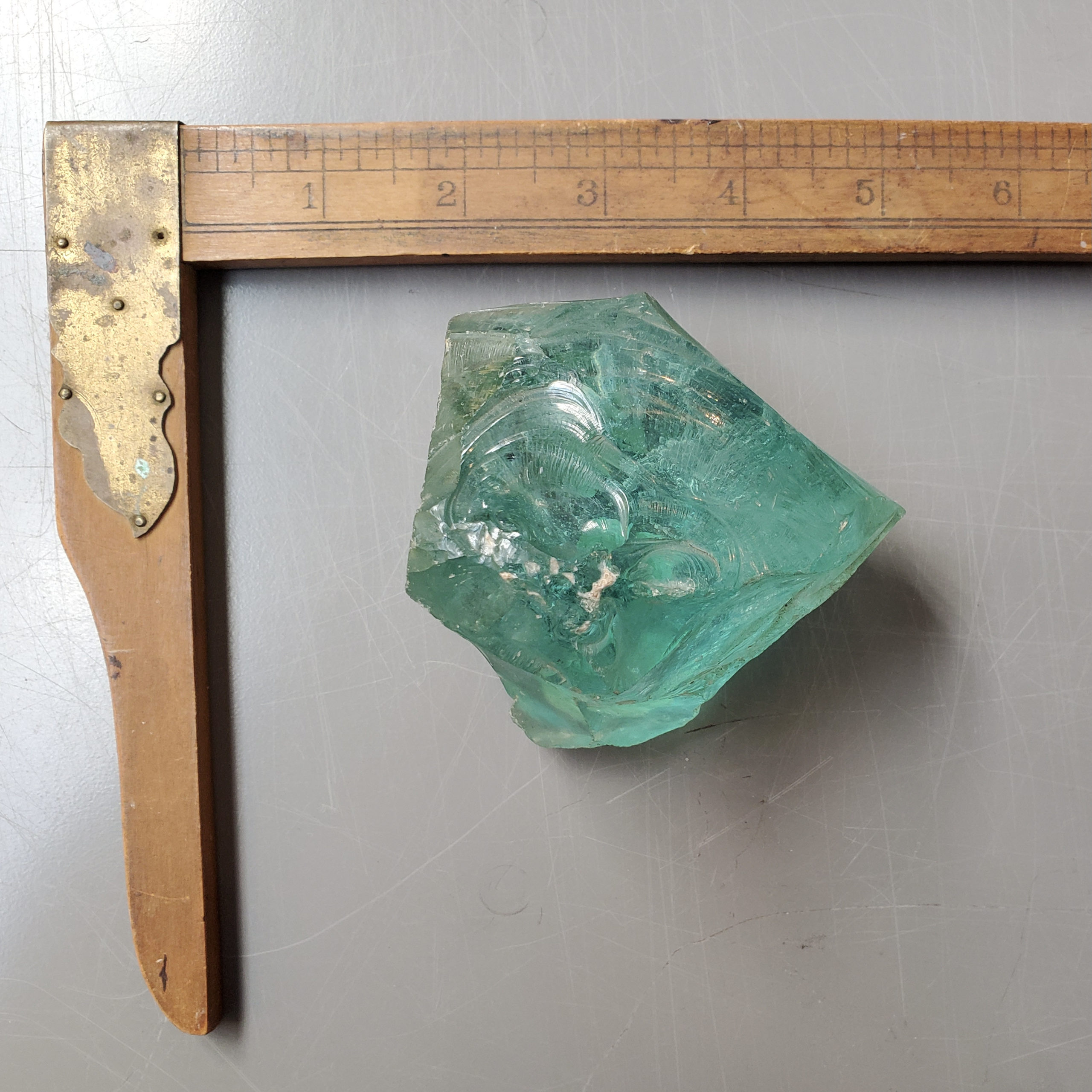
The enterprise did not last long, beginning in 1841 and ending a year or two later due to the “irregular habits” (an 1800s euphemism for alcoholism) of the business’s master glassblower, Irishman Matt Johnson. What little is known of the short-lived operation, however, provides a colorful story:
In 1841, John Rice, a Harrisburg landowner living on the Widener Rd., made the acquaintance of Matt Johnson, a young talented glassblower from Ireland who had come to Boston in the early 1830s. Not much is documented of Johnson’s formative experiences in Beantown, but he apparently worked at the Boston Glass Manufactory, where he met master glassman John Foster. Foster would go on to oversee various glass factories in Vermont and New York, before finally setting up his own newly formed glass factory in Redwood in Jefferson County in 1833. And Johnson, in turn, would follow Forster to the wilds of Upstate New York, joining his new Redwood operation in 1834 with several other glass blowers.
While the Redwood factory was constructed to make window glass, it’s probably best remembered for the fancy and rare decorative pieces (bowls, paperweights, canes and the like) that were made by Johnson and the other glass workers in their spare time – pieces that typically had an aquamarine tint due to their original formula for mixing the ingredients. Yet Johnson, whose skills and creativity were undeniable, had begun to develop a bit of a problem with “the wine-cup,” as historian Franklin B. Hough would say, and his drinking would ultimately lead to his departure.
By 1839, hearing rumors that a 20-year old Canadian entrepreneur, Amasa Mallory, was keen to finance a new glass operation in Mallorytown, Ontario, Johnson headed there to become the first (and ultimately only) glassblower for the new Canadian glass works. And while the Mallorytown factory soon began to generate small amounts of Johnson’s aquamarine tableware, bottles and whimsies, its operations did not last more than a year or two. Stated reason for its closure: “Matt kept showing up for work in an inebriated state or just didn’t show up at all, and finally Amasa Mallory decided he’d had enough.”
Enter Harrisburg and John Rice. While no one quite knows how their introduction came about, Rice’s granddaughter, Mrs. Della Curtis, would some years later write the following:
“In the year of 1841 my grandfather, John Rice, who lived in Harrisburg (Cobb District), became acquainted with a man by the name of Johnson, a skilled glass blower by trade. They agreed to start a glass factory, Mr. Rice to furnish the capital, Mr. Johnson to do the work. Early that fall Mr. Rice built a log factory a short distance west of his home. A brick oven was constructed in the glass house. The sand was drawn from Dexter, a distance of about 30 miles. Mr. Rice took Mr. Johnson and his family, consisting of his wife and two children, into his home and boarded them, as he did also one, and sometimes two, hired to work in the factory.”
And so it began. Johnson was left to create glassware for sale as he saw fit, blowing the pieces he loved: pitchers, sugar bowls, jugs, sauce dishes, and similar tableware. These were of the bluish aquamarine color he had become known for, often resplendent with Lilypads and other decorative flourishes. Occasionally, he would place a three-cent piece in the knobs of some of his sugar bowls.
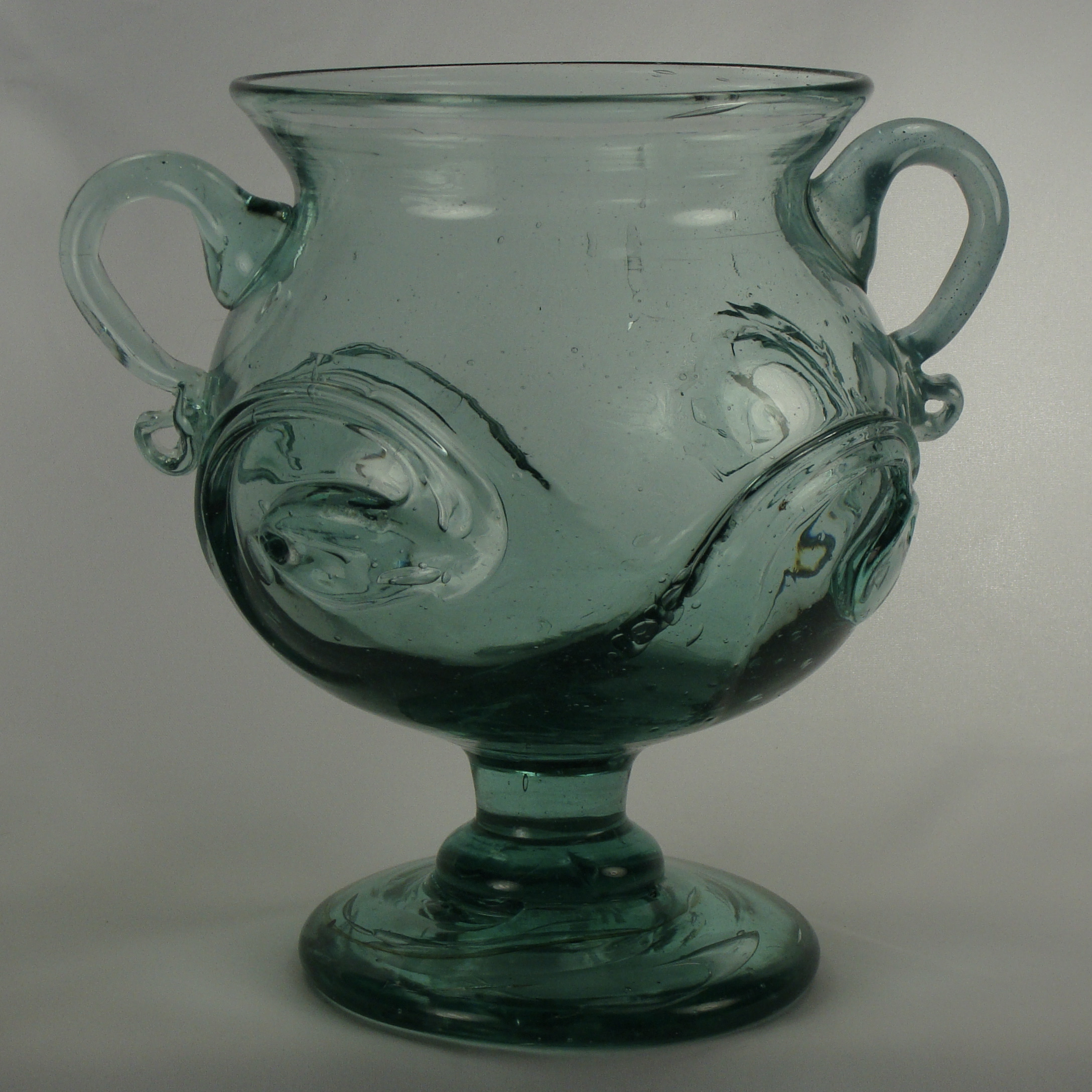
All of this glassware was made for local sale, and a good share of it was easily disposed of by Mr. Rice in his travels to Watertown, Dexter and Lowville. And, as Johnson’s work quickly developed a growing reputation, many a visitor made their way to the Widener Rd. factory to purchase his glassware directly. But then, once again “due to irregular habits” of the master glassblower, fortunes began to change. As Mrs. Curtis would later say:
“It was a paying project at first but in a short time Johnson would make an excuse that the blowpipes or other tools needed fixing in a nearby blacksmith shop and would wind up in a hotel near the shop where he would become intoxicated, leaving glass material that had been placed in the oven to burn. [Rice would return] with materials for the works and provisions for both families expecting to find quantities of glass ready for market only to find Johnson had been on a spree and the glass in the ovens ruined.”
As financial loses increasingly began to mount, Rice would threaten to close the operation, Mrs. Rice would plead that Johnson be given another chance for the sake of his wife and children, and Johnson would promise to do better. And with each reprieve, Johnson would briefly perform better, only to later slip away to some local watering hole, where he’d pay for his liquor with pieces of glass. You can guess the rest of the story: after several such trials, Rice ultimately gave Johnson the boot and the days of the Harrisburg Glass Factory came to an end.
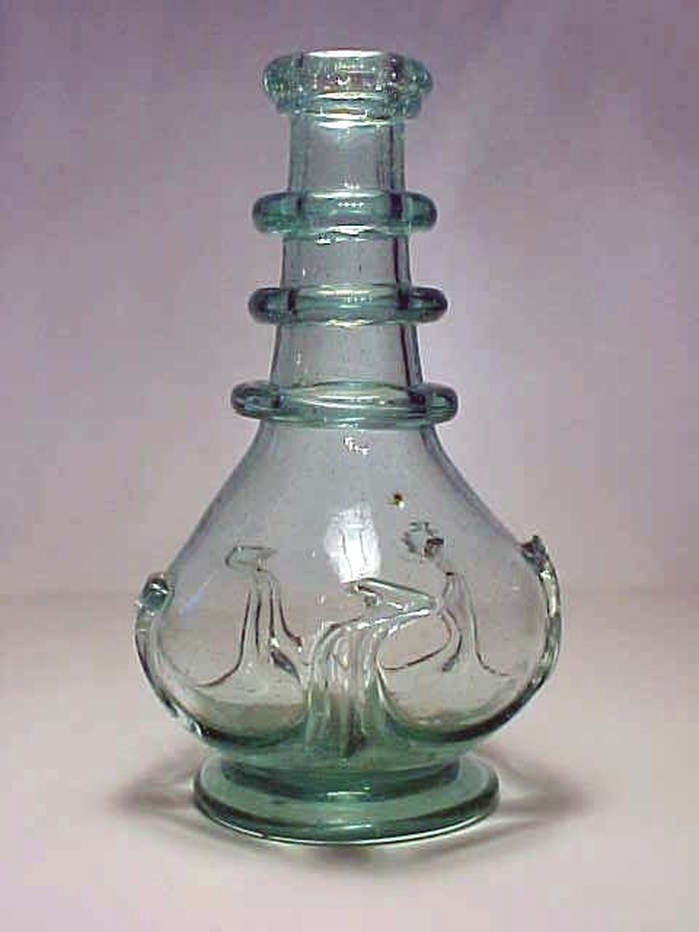
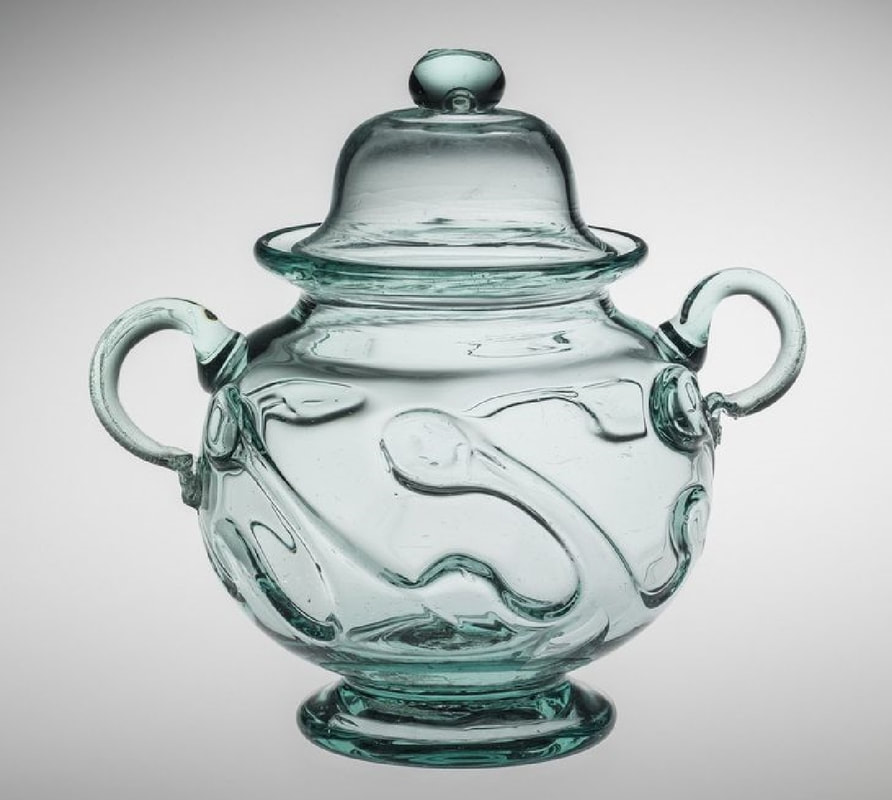
Unfortunately, the exact location of the factory remains a mystery – if it could be located, suffice it to say that the Lewis County Historical Society would endeavor to undertake an analysis of any remains. And its glassware gets harder and harder to find – most is in the hands of collectors, but a few pieces are available for viewing at places like the Corning Museum of Glass, the Houston Museum of Fine Arts, Bayou Bend and the Adirondack Experience.
Sadly, the Lewis County Historical Society has none of Johnson’s Harrisburg glassware – which is truly unfortunate, as there ought to be some of this important glassware preserved in Lewis County for future generations to see (hint, hint, for anyone who’d like to donate a piece to the Historical Society).

Dannatburg
Lewis County once counted amongst its numbers a variety of small settlements and hamlets, which today are mostly consigned to history. One of the most prominent of those was Dannatburg, a not inconsiderable settlement that saw its heyday in the late 1800s/early 1900s as a lumbering industry center with strong ties to New York City.
Dannatburg was situated on the Independence River, just north of what once was Rockville, along the boundary line between modern day Watson and Greig, about a mile from Chase’s Lake.
Site of the Lost Community of Dannatburg, NY
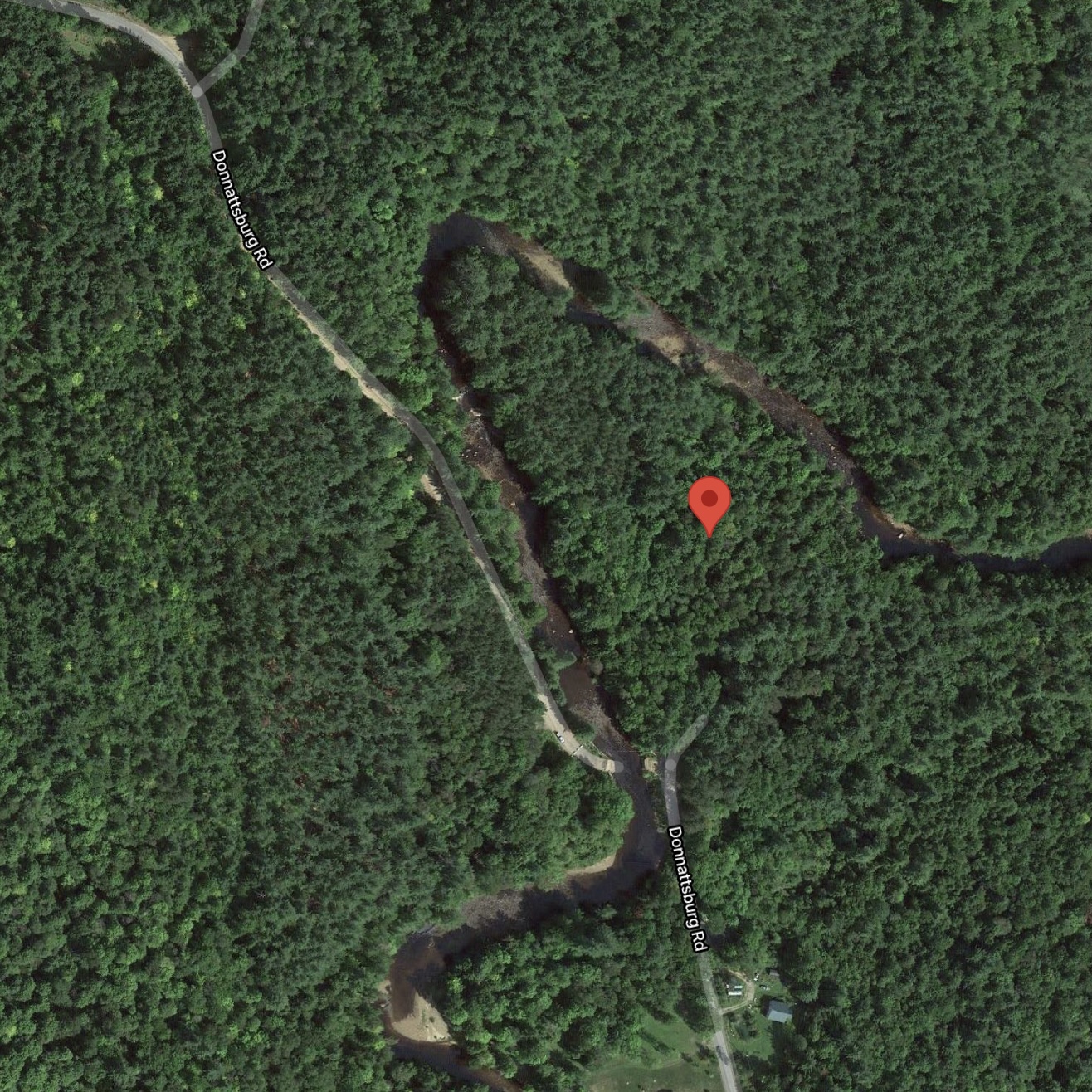
With a population that ultimately topped out around several hundred – say roughly the size of today’s Turin or Constableville or Castorland – it had all of the accoutrements one might normally associate with communities of that period: streets; houses; a post office; a large school; boarding facilities; stores; and several mills and factories. And yet, little now remains to mark the location of this historic place. While a few seasonal and second homes dot the area, Dannatburg is largely a faded memory at the end of an old road, which dead-ends at a washed-out bridge abutment on the Independence River – a road, we might point out, that routinely is misspelled “Donnattsburg.” But let us tell you, this place once was a thriving and prosperous Lewis County community.

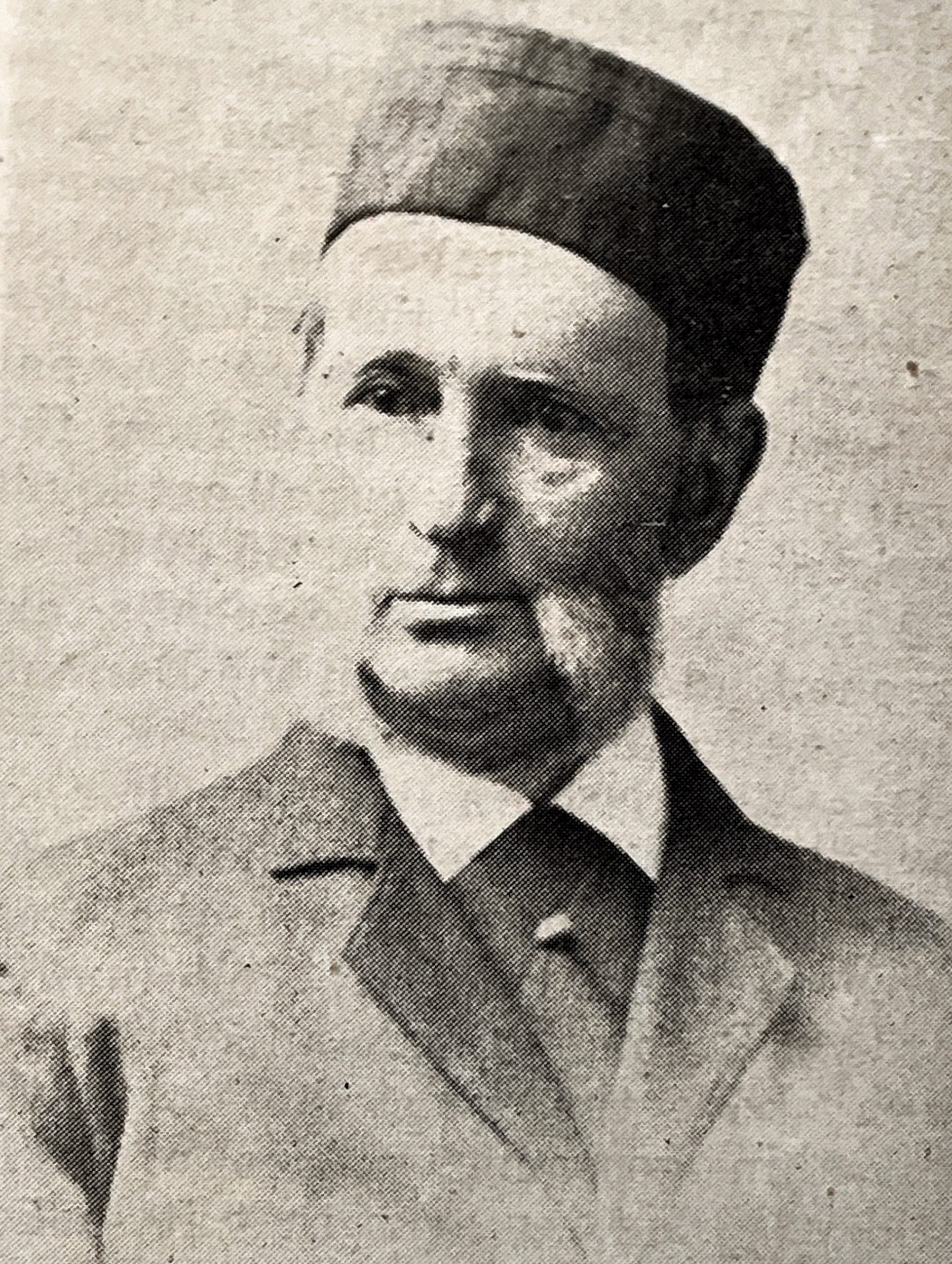
William Dannat Dannatburg NY
It began in the mid-1800s, when the first sawmill was built along the Independence in that location. The mill was soon acquired by John Crandall, a Quaker from New England, and quite quickly a hamlet known originally as Crandallville grew up around the mill. By the early 1870s, in addition to the mill, the community had acquired a joiner shop, a sash and blind factory, a store, a boarding house, a number of individual houses and upwards of 75 permanent residents. When the first mill burned, a larger mill was put up, which turned out hundreds of thousands of board feet of lumber a year. A canal was constructed creating an artificial island in the Independence, and a large mill pond was built for storing logs that were driven down the Independence each Spring.
By 1880, however, the Crandalls had agreed to sell their interests to William Dannat and the lumber merchants, Dannat & Pell. Dannat had become a lumber business entrepreneur after the Civil War, and his family business, Dannat & Pell, ran lumber yards in NYC that were among the most extensive anywhere in the American lumber industry. And when Dannat & Pell began buying large timberland acreage in Lewis County, Dannat himself focused on expanding the industrial capacity of Crandallville, which (not coincidently) was soon renamed in his honor as Dannatburg.
He built another sawmill, put in several upstream dams to hold the large log volumes, established more factories to manufacture tables, bedstands, carriages, and the like, built a tram railway from Stony Lake to Chase’s Lake in order to haul logs, and commissioned and installed a powerful steam engine to supplement the mills’ water wheels during those seasonal periods when the Independence was running low. Finished lumber and goods were then transported to Dannat’s landing at the Otter Creek lock and dam on Black River, where they would be loaded on canal boats and transported to New York City.

Surveyor’s Sketch Of Dannatburg Mill Buildings
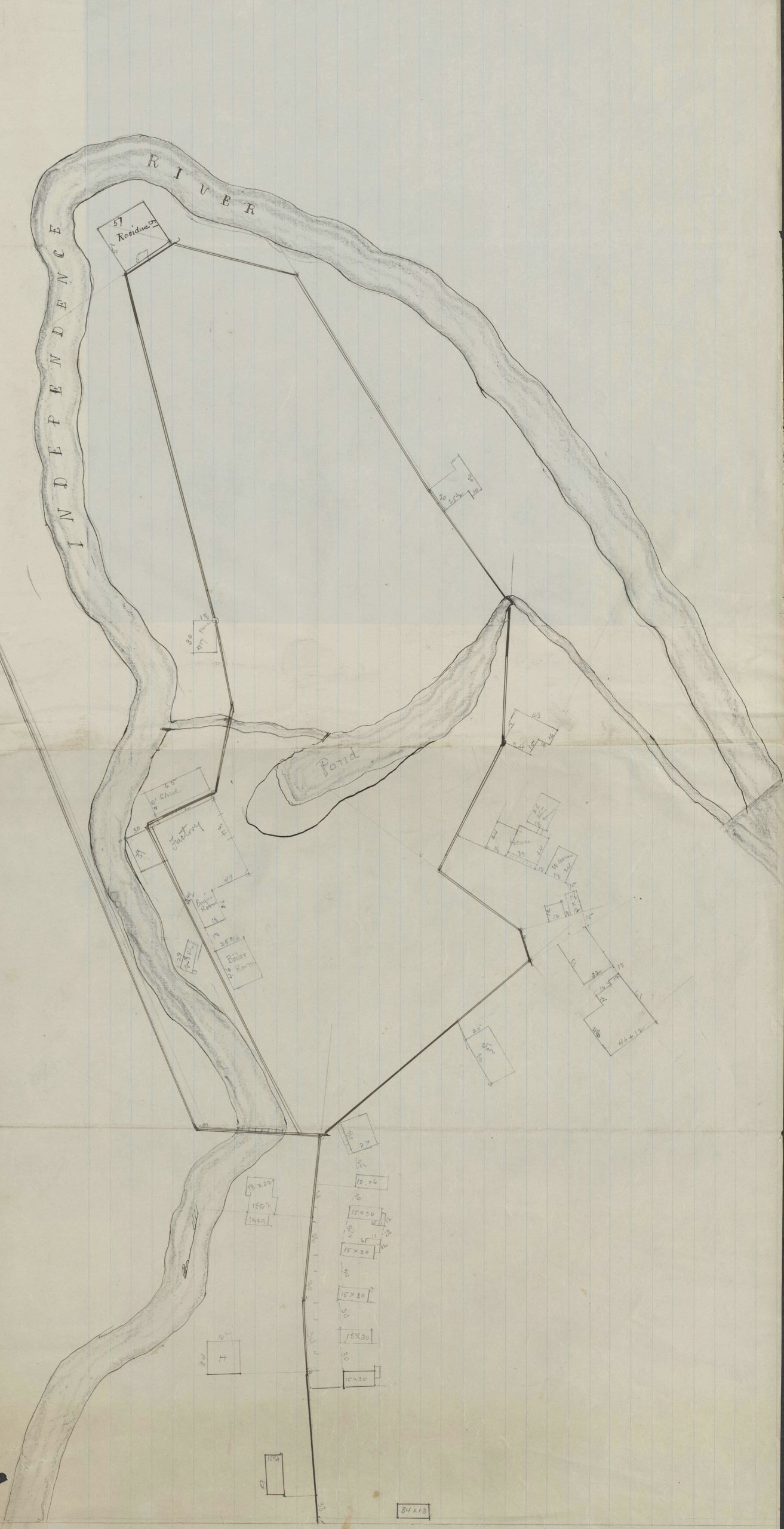
So busy were these mills and factories that Dannatburg quickly experienced a building boom. New homes came to line both sides of the Independence, streets were put in, additional boarding houses were put up, the school was enlarged and a post office was established. And while no church was ever built, the community had its own Methodist society, which conducted infant baptisms in the turbulent waters of the Independence. And for some twenty years or more, Dannatburg was a Lewis County boom town. Upwards of 300 men were employed by its businesses; 75 or more children routinely attended the Dannatburg school; and local lumbering industry thrived.
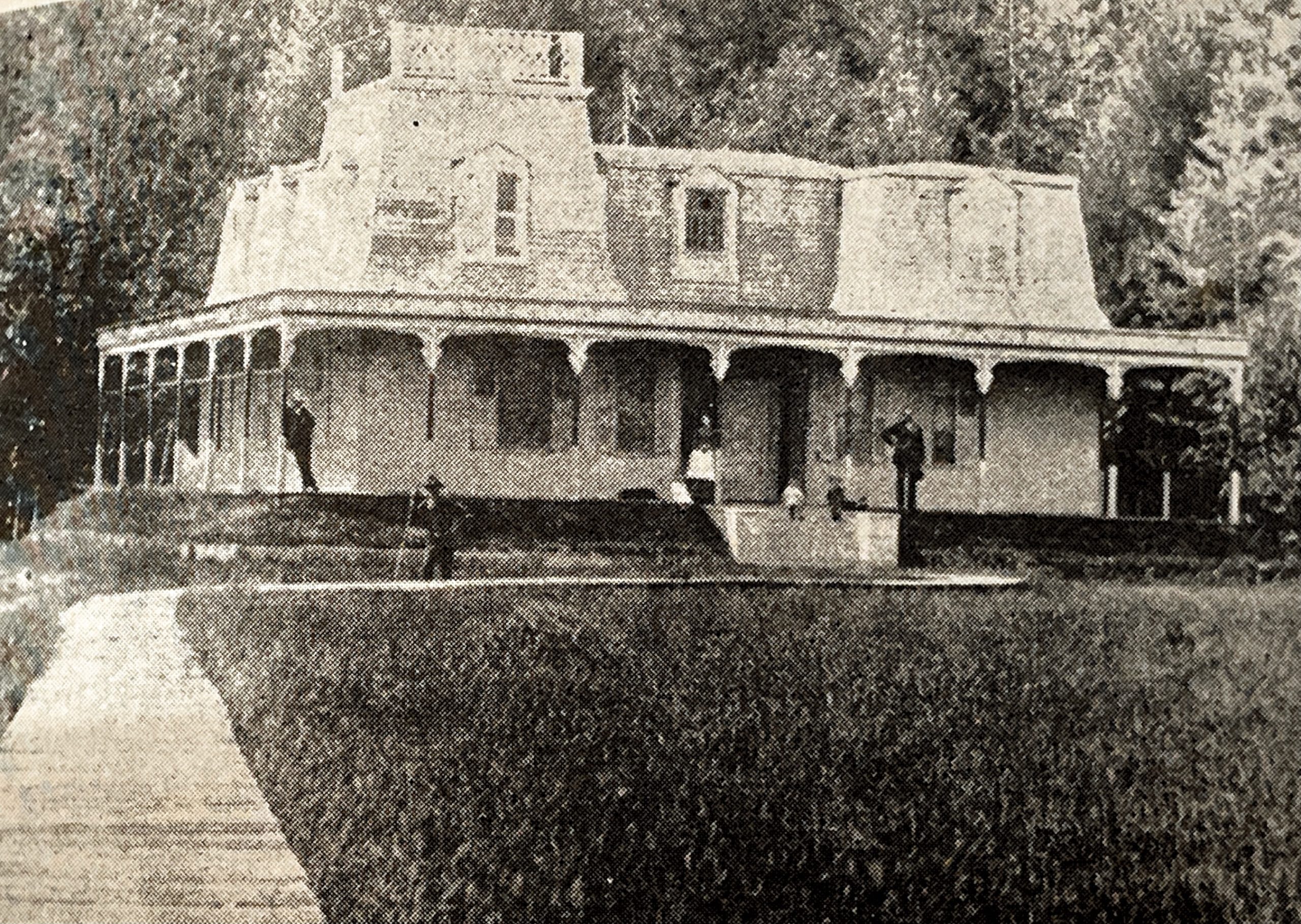
Dannat himself so came to love the sylvan solitude of the area that he ultimately built a large summer home on a man-made island in the middle of the Independence River. While the details of this mansion are somewhat scant, it had a mansard roof, was surrounded by a large veranda, and its interior woodwork and flourishes, balconies and large winding staircase were done in beautiful black walnut – much of which was said to have been crafted, installed, torn out and re-done until Dannat himself was satisfied with its look and quality. Large ornate stained glass windows were even imported from Paris just so the main hall would enjoy colored lighting. And the dapper Dannat was said to patrol his vast estates suitably attired in a frock coat, silk stovepipe top hat, bespoke boots, and gentlemen’s gloves, generally with a silver-topped walking stick.

Dannat Mansion Independence River Dannatburg NY
But make no mistake, Mr. Dannat’s urban life amenities and high fashion aside, life in Dannatburg was anything but easy. Like many of the lumber industry mill towns in Lewis County at the time, those who worked there faced the dangers of sudden river floods, unexpected forest fires, treacherous log drives, unsafe mill conditions and, all too often, the loss of life, sometimes in horrible fashion. Unfortunately, such was the nature of that business at the time.
And then, almost as quickly as Dannatburg grew to such prominence, its fortunes began to decline with the dawn of the twentieth century. Dannat would die on a trip abroad in 1889, his mansion on the Independence burned, his remaining business partner, Charles Pell, and Dannat’s family were less enamored with Lewis County than Dannat had been, their holdings in Lewis County were gradually sold, and ultimately his company, Dannat & Pell, was liquidated. Business at the local mills declined and, without Dannat’s robust NYC connections, ultimately it dried up altogether. Residents moved away; many of the houses were sold off and, so as not to be wasted, a good number of them were moved and rebuilt elsewhere; and the rest…well, they just faded away. Even the square whitewashed schoolhouse, which once was filled with young children, dwindled away until no students were left – though for years, this building stood as the sole vestige of the once prosperous community. But today, even the Dannatburg schoolhouse is gone.

Florence Merriam Bailey
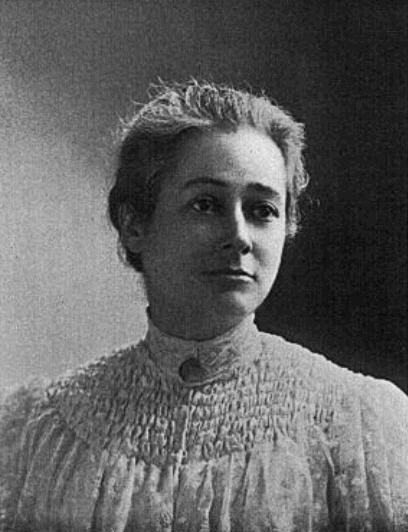
Oft called the “First Lady of Ornithology,” Florence Merriam Bailey broke barriers as a woman by developing a pioneering approach to ornithological study that has come to define modern bird-watching. Having developed her interests exploring the wooded hilltops around her family’s Homewood estate outside Locust Grove, New York, she is today remembered not only for her expertise, but her moving writings and activism.
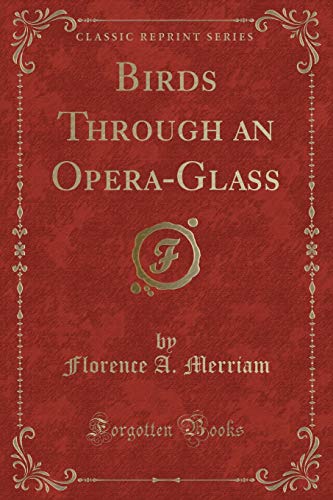
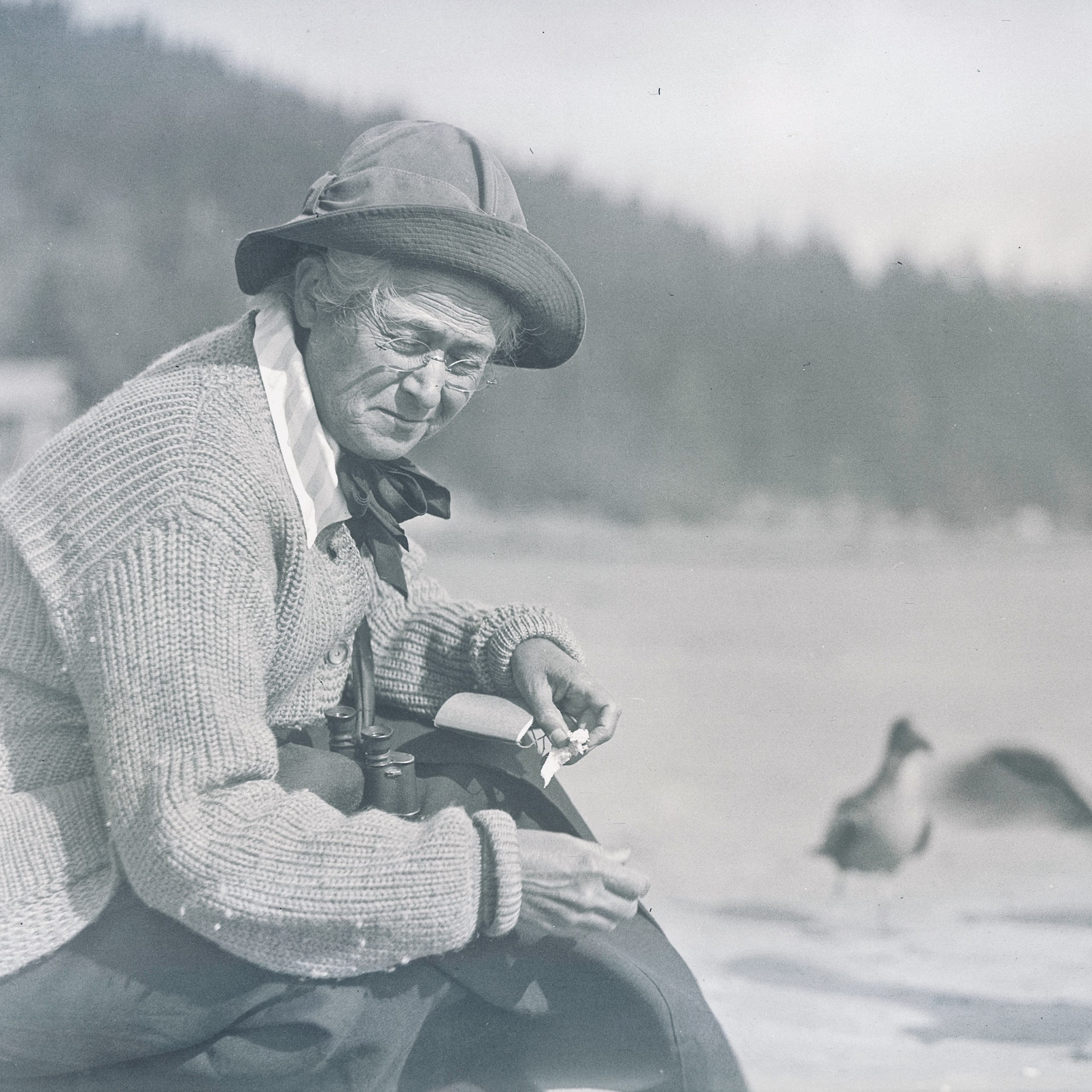
At 26, she wrote what is considered the first bird field guide in the modern tradition, “Birds Through An Opera-Glass.” She traveled widely and spent almost three decades with her husband covering the American West. Of her many books, “Birds of New Mexico” is regarded as her magnum opus. Her writings were compared favorably to those of John Muir and John Burroughs, and she was known as “one of the most literary ornithologists of her time, combining an intense love of birds and remarkable powers of observation with a fine talent for writing and a high reverence for science.”

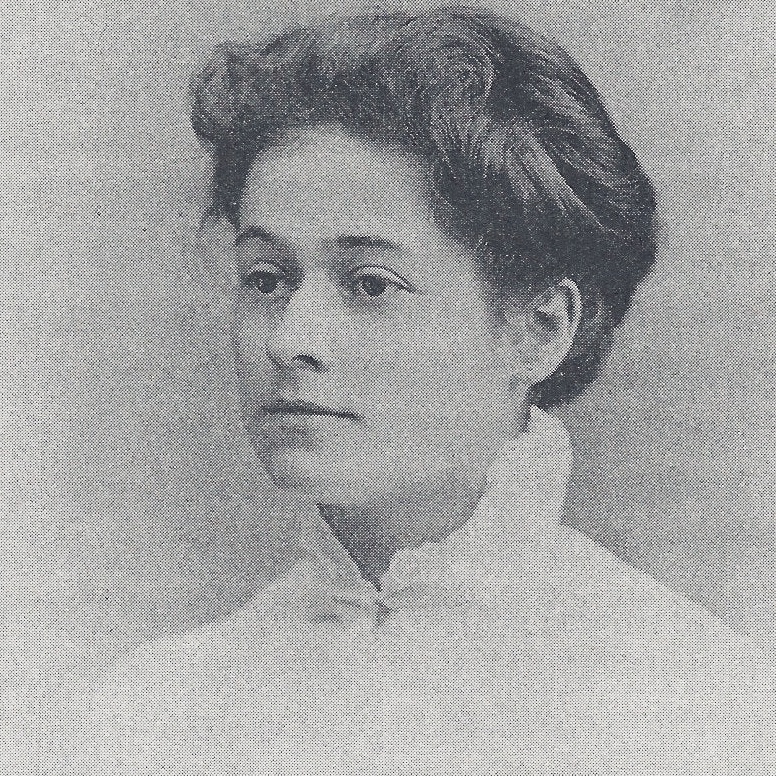
Young Florence 
Birds Through An Opera Glass Book
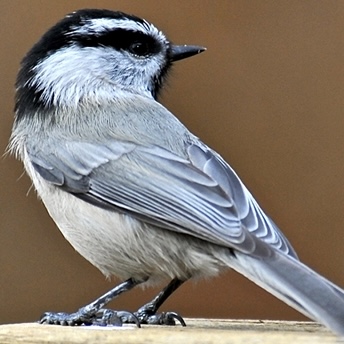
She waged a successful battle before Congress against the indiscriminate killing of birds for feathers to decorate ladies’ hats (a fashion trend that resulted in the death of over 5 million birds annually). She is the first woman to be elected a Fellow of the American Ornithologists Union; first woman recipient of the acclaimed Brewster Medal; founding member of the Audubon Society; and both Mount Bailey in southern Oregon and the Bailey’s Mountain Chickadee are named in her honor.

Mt. Bailey Oregon 
Bailey’s Mountain Chickadee

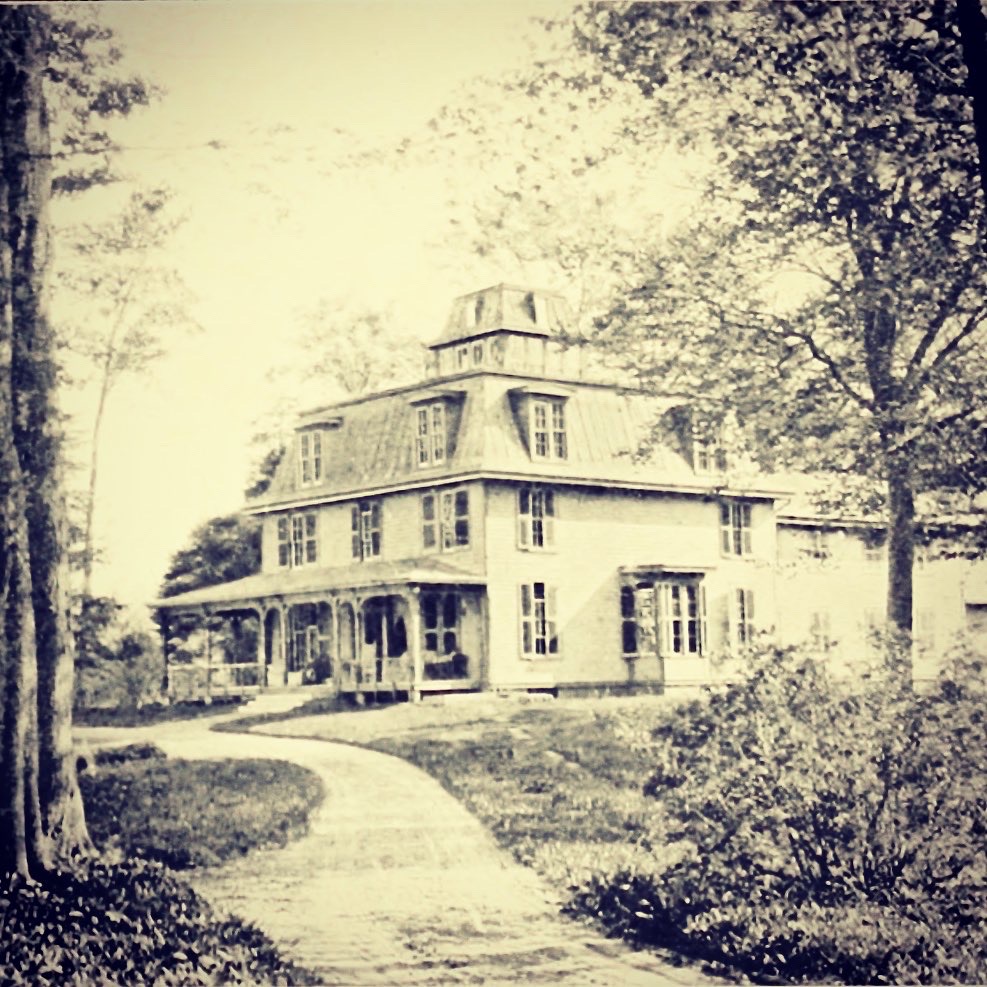
Born into one of Lewis County’s earliest and most influential families, Florence Merriam was born on the family estate – Homewood – just outside Locust Grove in the town of Leyden. Her great grandfather was Judge Nathaniel Merriam, one of Lewis County’s earliest judges; her grandfather was Ela Merriam, a General in the NY Militia, and for years an operator in Lewis County of stage and mail coach lines and one of the men principally responsible for creating and maintaining many of the wooden “plank roads” that ran through the County; her father was Clinton Levi Merriam, a Congressman for Lewis, Jefferson and Herkimer counties and a deft businessman and investment banker; and her brother, C. Hart Merriam, was renowned as the “father of American mammalogy” and, in the fields of zoology and natural history, can scarcely be judged as anything less that preeminent.
So she came from “good stock,” as they say. She grew up at her family’s wooded estate, Homewood, where she cultivated a fascination and passion for birdwatching. Not only did her family greatly support and encourage her scientific pursuits, but famed nature author Ernest Thompson Seton, a family acquaintance and regular visitor to the Merriam home, strongly encouraged Florence to seek out her interests in ornithology and pursue seriously a role in the field. And she did just that. After attending preparatory school, Florence went on to Smith College and received a certificate of completion in 1886 (the college would later award her a Bachelor of Arts) and in 1893-94, she furthered her studies at Stanford University.

Homewood
In 1885, she joined the American Ornithologists’ Union (OAU), a group in which her brother was a founding member. She was the first woman to do so. A few years later, at the young age of 26, she published her first book, Birds Through an Opera Glass (1889). The book was monumental, considered to be the first modern field guide for birdwatching. Her purpose in writing it was to benefit and aid both ornithologists and the casual observer when birdwatching. Her book truly set her place in the field as a serious ornithologist, characterizing her expertise and strength as a writer. In following years, she released many more publications on both scientific writings and one memoir on her travels, particularly her experience with visiting the Latter Day Saints group.
Vernon Bailey, a biological naturalist and friend of the family, was staying with the Merriams when he inevitably met Florence. Due to their shared passions, the two got along quickly and were married on December 16, 1899. The couple shared their lives traveling across the country together conducting field work, with Vernon studying animals and Florence studying birds. Her strength and vitality is especially remarkable considering that she experienced ill health for a large portion of her life, including tuberculosis. The couple had no children, instead devoting their life to scientific service.
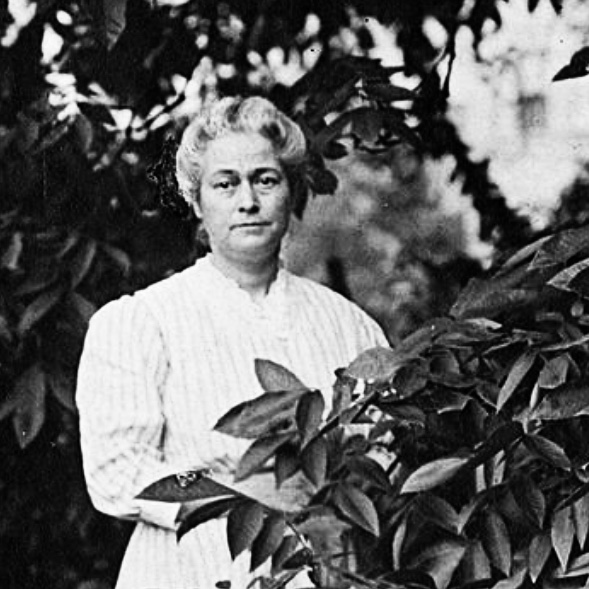
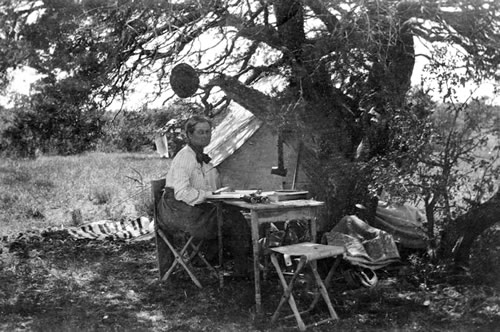
Along with her invaluable scientific expertise, Florence Merriam Bailey was renowned in her activist work. Traditional ornithology consisted of general classifications and identification. Oftentimes, scientists conducted this research through the use of the “skins” of deceased birds, which were typically found in private collections. Florence Merriam Bailey, on the other hand, was much more interested in studying the behaviors and manner of birds, so she championed the study of live birds and is generally considered the first to have proposed using binoculars when birding. Her passion motivated her to found the Audubon Society of the District of Columbia, a group dedicated to the conservation of birds. Now, ornithology is mostly concerned with the study of living birds as opposed to dead birds, much thanks to Florence Merriam Bailey.
Additionally, she was disheartened at the act of killing birds for use of their feathers in fashion. Women’s hats adorned with bird feathers were particularly fashionable. Moved to publicize this slaughter, Florence wrote passionately against the practice of decorating hats in that fashion and ultimately laws were passed outlawing the practice.
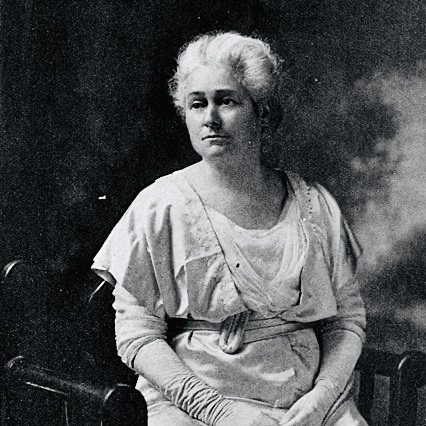
Throughout her life, Florence Merriam published under her own name, an unusual practice at the time. Her independence and belief that the efforts of women deserved respect was often reflected in her own writing. In describing a female warbler, for example, she wrote: “Like other ladies, the little feathered brides have to bear their husbands’ names, however inappropriate. What injustice! Here an innocent creature with an olive-green back and yellowish breast has to go about all her days known as the black-throated blue warbler, just because that happens to describe the dress of her spouse!”
Merriam Family Cemetery Leyden NY
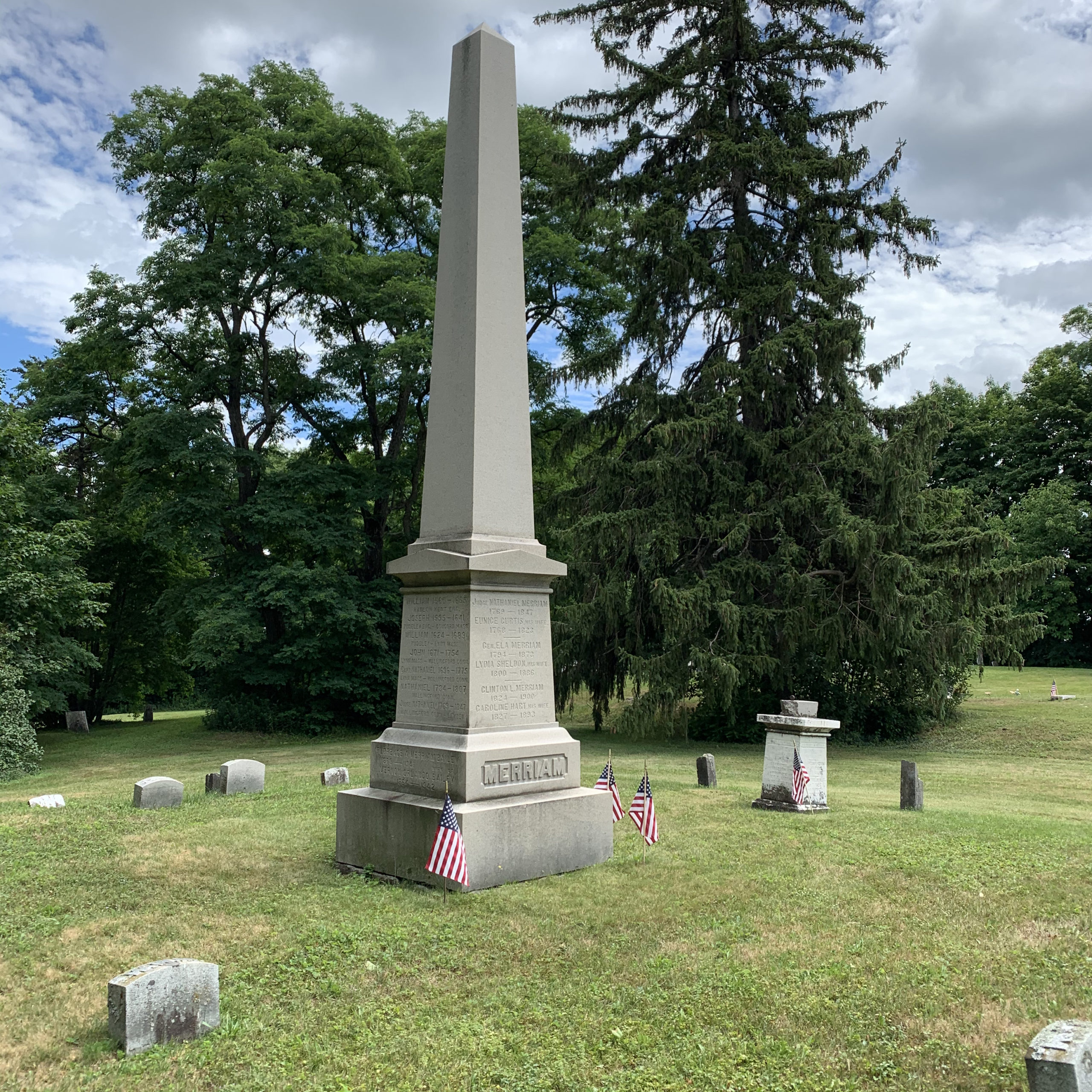
Florence Merriam Bailey died on September 22, 1948 in Washington, D.C. She is interred with her family in the old Merriam cemetery along Route 12D in Locust Grove, Lewis County, New York. Her legacy is reflected in her dedication to modernizing the field of ornithology. In her honor, a subspecies of chickadee in California was named after her – the Bailey’s Mountain Chickadee (Parus gambeli baileyae), as was a mountain in the Oregon Cascade Range (Mt. Bailey). Some other highlighted publications include: Birds of Village and Field: A Bird Book for Beginners (1898); Handbook of Birds of the Western United States, Including the Great Plains, Great Basin, Pacific Slope, and Lower Rio Grande Valley (1902); Birds of New Mexico (1928). Her rich and literary writing is as impressive as her knowledge in the field.